Sunday, October 20, 2013
2013 Infiniti LE Concept Review And Prices


 The 2013 Infiniti LE Concept has 134 horsepower and 240 pound-feet of torque represent increases of 24 horses and 30 lb-ft over its less powerful sibling. Infiniti is quick to point out that the 2013 Infiniti LE Concept is not a small car. At 186.4 inches, its length is roughly the same as Infinitis G sedan. Atop the EV platform sits a highly streamlined body, which pays dividends with a .25 coefficient of drag that ought to help the LE reach its estimated 100-mile range. Theres plenty of technology packed into the 2013 Infiniti LE Concept, including what the automaker calls Infiniti Connection, which includes Infinitis Personal Assistant 24-hour concierge service, navigation, and POI search. Also on the menu is a wireless charging system in addition to the standard DC 50 kW quick charger. The 2013 Infiniti LE Concept Prices soon be revealed.

Saturday, October 19, 2013
smart ebikes for Michael Schumacher and Nico Rosberg
 Smart ebike with Michael Schumacher and Nico Rosberg From now on Michael Schumacher and Nico Rosberg will also be zipping around on cutting-edge two-wheelers. The MERCEDES AMG PETRONAS Formula 1 drivers are the world’s first owners of the new smart ebike, which will be launched on the market in April 2012. Schumacher und Rosberg received their futuristic ebikes at the last tests in Barcelona before the start of the season.
The smart ebike will initially be available in two colour variants: in crystal white with electric green accent trim parts and in matt dark grey with flame orange accent trim parts. The price is attractive – for example, in Germany it starts at €2849 (incl. VAT). With an unconventional design in line with the style of the brand, functions appropriate for city use and high technology standards that are demonstrated by the extremely efficient and high-performance drive package and high-quality components, the smart ebike has an exceptional position and guarantees dynamic, safe and fun cycling.
Friday, October 18, 2013
Volkswagen Also Compete in WRC

Thursday, October 17, 2013
 Modern Batik car 2010
Wednesday, October 16, 2013
2012 Volkswagen Up GT Concept
 In any case, this is what the Volkswagen Up! GT Concept has to offer. Compared to the its standard version brethren, the GT version is a monster on four wheels, at least as far as relativity is concerned.
It carries a turbocharged three-cylinder engine that produces 100 horsepower and 111 lb/ft of torque - a significant improvement from the 75-horsepower output of the standard version - while carrying a 0-60 mph sprint time of nine seconds.
But more than all the numbers, the Up GT! Concept also carries some aesthetic improvements from the standard Up, including a more serious front bumper with LED running lamps, a roof spoiler, twin-chrome exhaust finishers, and a set of 17" wheels as the cherry on top of the proverbial sundae.
2012 Volkswagen Up GT Concept from (http://www.topspeed.com/cars/volkswagen/2012-volkswagen-up-gt-concept-ar116025.html)
Tuesday, October 15, 2013
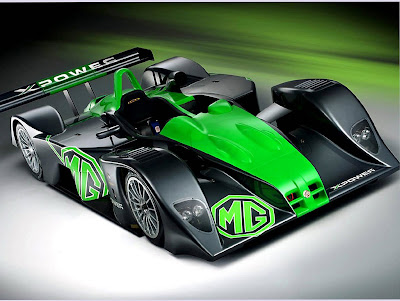
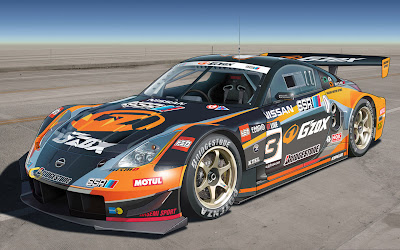
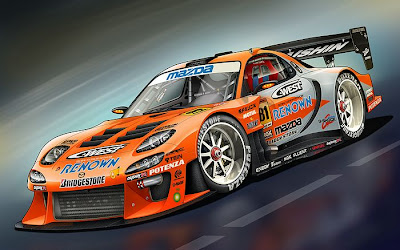
Sport Car Pictures
Monday, October 14, 2013
Suzuki Splash 2012


- Suzuki Splash, 2012
Suzuki announced the 2012 Splash Mini-MPV, incorporating styling refreshments to both exterior and interior that brings Suzuki Splash right up to date for the second half of 2012 and beyond. Most importantly there are no increases in pricing and Suzukis very popular VAT free offers have now been extended across the Suzuki Splash range with the 1.0-litre SZ2 available from just £7,777.
The list of changes includes new front and rear bumper styling, new bonnet and grille design, new design seat fabric and graphite colour scheme, Piano Black finish to centre console and Black cloth finish to the front door armrests. The changes in bumper designs have resulted in an overall increase in length of 60mm, taking Suzuki Splash to a still very compact 3,775mm.
Sparkling Blue metallic has now also been added to the colour range as an option, adding to Galactic Grey, Silky Silver and Cosmic Black metallic paint finishes as well as Superior White and Bright Red standard solid colours.
Suzuki Splash is compact enough to manoeuvre with ease through narrow streets or to slot into tight parking spots. Yet on the inside its elevated driving position means it can comfortably seat five adults with plenty of legroom and luggage space, at the same time providing a great view of the road. The high seating position makes for easy entry and exit, while folding the one-touch rear seats forward - split 60:40 - creates a virtually flat load floor and opens up 573 litres of luggage space (VDA), including a handy waterproof compartment beneath the boot floor.
Two spirited but highly economical engines are offered: Suzukis 68 PS VVT 1.0-litre (Variable Valve Timing) three cylinder unit and latest Dual VVT (inlet and exhaust camshaft) 94 PS 1.2-litre petrol engine that was first used in the all-new Swift.
Both engines are tuned and engineered with an emphasis on everyday driveability and cost-effective motoring with combined fuel consumptions of 60.1mpg for the 1.0-litre and 55.4mpg for the 1.2-litre (automatic 49.6mpg). The 1.0-litre emits just 109g/km of CO2 meaning it qualifies for £20 annual road tax, free in the first year. Manual transmission 1.2 litre models with emissions of 118g/km cost just £10 more in annual VED, again free in the first year.
Five models make up the Suzuki Splash range. The 1.0-litre is available in SZ2 and SZ3 trim; the 1.2 model is available in either SZ3 or SZ4 grades, with optional automatic transmission available on the SZ4.
All Suzuki Splash models offer a comprehensive equipment list as standard including four airbags, CD tuner with MP3 player and steering wheel-mounted audio controls; leather-trimmed steering wheel; remote central locking; front electric windows with drivers auto-down; electrically adjustable and heated door mirrors; height-adjustable front seats; tilt adjustable steering wheel and an information display. 1.0-litre SZ3 models upwards add air conditioning as standard.
Step up from SZ3 1.2-litre to SZ4 and the standard specification is even higher with ESP (Electronic Stability Programme); curtain shield airbags, 15 inch alloys, front foglamps, keyless entry and start and privacy glass for the rear side windows and tailgate.
Sunday, October 13, 2013
2011 Honda Accord Sedan Price of 21 380
 The 2011 Honda Accord Sedan is the latest version of 2011 Honda. 2011 Honda Accord Sedan was extremely amazing. Where you can enhance the ability of this new type of SEDAN.
 2011 Honda Accord Sedan has a 4-door, 5-passenger family sedan, available in 11 trims, ranging from the LX 5-Spd MT to the EX-L V-6 5-Spd AT w/ Navigation System. 2011 Honda Accord Sedan is available at starting price of $21,380 - $31,830. Before Production, the 2011 Honda Accord Sedan LX 5-Spd MT is prepared with a standard 2.4-liter, I4, 177-horsepower engine that achieves 23-mpg in the city and 33-mpg on the freeway.
 The 2011 Honda Accord Sedan EX-L V-6 5-Spd AT w/ Navigation System is equipped with a standard 3.5-liter, V6, 271-horsepower engine that achieves 20-mpg in the city and 30-mpg on the highway. A 2011 Honda Accord Sedan has 5-speed automatic transmission with overdrive is standard.
Saturday, October 12, 2013
Mansory Cyrus 2009


- Mansory Cyrus, 2009
Already for more than 20 years, the Bavarian company Mansory has been developing and producing fascinating car modifications for demanding customers all over the world. The latest creation of the top-class manufacturer is called Mansory Cyrus and is based on the Aston Martin DBS or DB9. Perfect processing and an elaborate technology are the hallmarks of this masculine aerodynamic power pack. A coilover suspension provides the best road holding and emphasises the striking rims in XXL. The refinement is perfected by an exclusive interior programme.
Haute Couture on wheels
Tailor-made processing and perfect surfaces confirm the superb quality of the Mansory designer outfit. The Mansory Cyrus aerodynamics components are made of extremely light „prepreg autoclav carbon" and do not only include wing extensions for the front and back, but also side skirt attachments and linings. At the front axle, a newly designed front skirt with enlarged air inlets provides the optimal ventilation for the twelve-cylinder aggregate. The Mansory Cyrus front is visually enhanced with the newly designed carbon bonnet. With its two slotted "power domes" additional fresh air is directed to the front motor. Also at the tail, the refining engineers have invented something extraordinary in order to perfect the visual appearance of the Aston Martin. The newly designed rear skirt with the integrated diffuser emphasises the superior look and provides space for four stainless steel end pipes of the sonorous sport exhaust system.
Design wheels in XXL
The optimal road grip is provided by the 9x20 and 10,5x21 inch rims in combination with Dunlop Sport Maxx tyres measuring 255/30ZR20 at the front and 295/25ZR21 at the back. The design of the ultra-light forged wheel thereby unites sportiness and elegance and perfectly fills out the wheel houses. In addition, an optimally adjusted coilover suspension lowers the centre of gravity of this noble sports car and renders perfect road holding characteristics.
Luxurious atmosphere in the Mansory super sports car
The Mansory Cyrus driver will take his seat in a elaborately refined interior which is nothing short of the exterior. The entire modification includes pedals and foot rests made of aluminium as well as exquisite door sills and head rests with embroidered Cyrus logos. Mansory enhances the interior with a set of tailor-made carbon parts for the dash board and centre console. Generally, the noble interior is only lined with best quality materials. Decoration stitches by expert hand on the dash board and the seats render visual high-lights and perfect the significantly beautiful overall impression of the complete leather equipment. The ergonomically re-designed steering wheel with airbag lies especially well in the hand.
Friday, October 11, 2013
Shutter Speed The new kid on the block

The 1981 Formula One season continued with the on-going dispute between the FIA, the sports governing body and FOCA, the Formula One Constructors Association. At the first race it came to a head and only at the insistence of the principal sponsors of the teams would any kind of reconciliation take place and the season got underway at Long Beach.
At Ferrari there was a new kid on the block. Jody had retired having achieved his goal of the World Championship in 1979. He stuck around for 1980 with the T5 disaster falling down around him. Some drivers would have just thrown up their hands and called it a day, but Jody showed his class by sticking to Ferrari so they could capitalize on his achievement. The new kid was Didier Pironi who had moved over from Tyyrell.
When I joined Ferrari the whole team was devoted to Gilles. I mean he was not just the top driver, he was much more than that, recalled Pironi. He had a small family therehe made me fit right in. I felt at home right away. Gilles made no distinctions. I was expecting to be put in my place. I was not number one. I was number two yet he treated an equal all the way.
During the off-season Gilles had toiled away at what he loved besta faster and better car. As it stood, anything would have been an improvement on the T5. Everyone in Formula One was playing catch-up in an attempt to gain on the power advantage the turbo Renaults had over the normally aspirated engines.
The 126 had made its debut in 1980 at Monza during Saturdays practice, but was not raced due to lack of development. When it turned up at Long Beach there was something missingthe beautiful sound of the flat 12 engine. The new engine was a fully turbo-charged V-6 that developed 560 bhp at 11,500 rpm. The sliding skirts had been banned for many reasons, one being safety. The car would not be totally on rails as it had been for the last number of years; the driver would again be in control. This delighted Gilles. Now dubbed the 126C, the red rocket hit the streets of Long Beach flying.
Gilles managed to put the car into fifth place on the grid right out of the box. Pironi was back in eleventh in his first drive for Ferrari. Ricardo Patrese sat on the pole in an Arrows to everyones surprise. Alongside him was the new World Champion Alan Jones in a Williams. Third was Carlos Reutemann in the second Williams with Nelson Piquet in fourth.
At the start Gilles took advantage of the incredible power of the Ferrari and attempted to take the lead on the outside. The attempt was very nearly successful, but Gilles slid wide going into the Queens Hairpin. He attempted several other late-braking manoeuvres, but continued his backward slide. He eventually coasted to a stop with a broken drive-shaft. Pironi would also retire with fuel pick-up problems. Jones would claim the first victory of the season.
The only other event I remember that weekend was while standing with Dr. Hugh Scully of the Canadian Medical team that oversees much of Canadian racing including the Canadian Grand Prix. Hugh was accompanied by his young wife. Crowds tend to have some sound at a Grand Prix even during practice, but I noted that the spectators at the turn we were standing at were silent. I also noticed they were not looking at the cars at all. Most were looking in our direction. I could not figure out what their interest was until I saw Hughs wife doing a stretching exercise by putting her foot up on the cement guard rail next to the track near a marshalls station. I looked at her then pointed at her new fans. She promptly took the foot from the cement wall in both her hands and raised it until it was straight up! Her toe was perfectly pointed into the heavens! The crowd went nuts! Hughs wife is Vanessa Harwood, at the time a principal ballerina with the National Ballet Company of Canada! Did I get a shot of it? Dont ask. It embarrasses me that I did not.
Gilles DNFed in both of the South American races after starting 7th in each. The turbo let go in Brazil and another drive shaft went in Argentina.

The Italian Grand Prix had been relocated in 1980 and held for the first time at Imola, a small principality just south east of Ferraris home of Marenello. It was so successful that a new race was created as organizers were able to skirt the rules governing the number of Grand Prix per country and the distances between circuits. Imola and Monza were certainly close by most standards, which should have had to be dealt with according to the rules, but Monza, the traditional Italian Grand Prix remained on the calendar for September.
Friday saw many of the teams threatening to boycott the race over various ground-effects infractions. Colin Chapman had withdrawn his Lotus 88 when it was declared illegal during scrutineering. Eventually things settled down with all moveable or flexible skirts on the underside of the cars being removed. A ground clearance check was made on every car as it returned to the pits after a run. A number of teams found ingenious ways to have the car lower itself while on the circuit. This post run inspection created chaos and line-ups in the pits.
For the first time in Italy a Ferrari would carry the number 27. Pironi would campaign 28. Gilles promptly put 27 on its first pole ahead of Reutemann in the normally aspirated Williams-Ford. Pironi was back in sixth. It was the first pole for Gilles since Long Beach in 1979. He fully admitted it had been a long dry spell.
At the start, in the wet, Gilles took the lead with Pironi slicing through the pack to take second. The two Ferraris drove the fans nuts until Gilles dove into the pits to change to slicks as the track began to dry. Luck being what it is, the rain began again as he drove out onto the track. Two laps later he was back in to change his rubber again. In effect, his race was run as he was the better part of a lap down in fourteenth.
Gilles charged on with his usual gusto and set the fastest lap over and over, but still found himself in seventh at the end. Pironi scored the first points for the 126C with a fifth.
Gilles and Didier had become good friends by this time. Both shared any information they had about their cars and encouraged each other. Later, when Didiers wife gave birth to twins, they named one of them Gilles.

next: Terror at Zolder!
Read the rest of the Shutter Speed series here.
Related posts:
- Shutter Speed: Down; but not out!
- Shutter Speed: The first book and the first nine!
- Shutter Speed: 1976 A Big Year!
- Shutter Speed: More World Cup and the disastrous T5
- Shutter Speed: The continuing brush with greatness